If only Latin America’s biggest nation could apply its Promethean pencil-pushing to the tragedy that is deleting its future. Latin America is home to 43 of the world’s 50 most murderous cities: 19 of them are in Brazil.
Global terrorism might have claimed more than 3,300 lives globally in the first half of 2015; Brazil trumped that body count in just three weeks. No country registered more murders that year: 60,000.
Those numbers alone would suggest the need for more restrictive gun laws. Scholars reckon that thanks to controls written into the 2003 disarmament statute, Brazil avoided 135,000 homicides through 2007. So it’s hard to buy the current proposals championed by gun lobbyists and a few political yahoos who aim to make Brazil safer by slackening controls.
Yet the nexus between legal guns and violent crime is more complicated. Yes, most of the arms seized in criminal acts in Brazil were sold clean and then ended up in outlaw hands. Still, putting a tourniquet on commercial handguns does nothing to stop the leak to the criminal underworld, and seems a ham-handed way to tackle broader problems, like arms smuggling, cross-border crime cartels, and especially crooked cops who feed the black market. “Brazil is a sieve,” said Bevilaqua. “Everything passes through.”
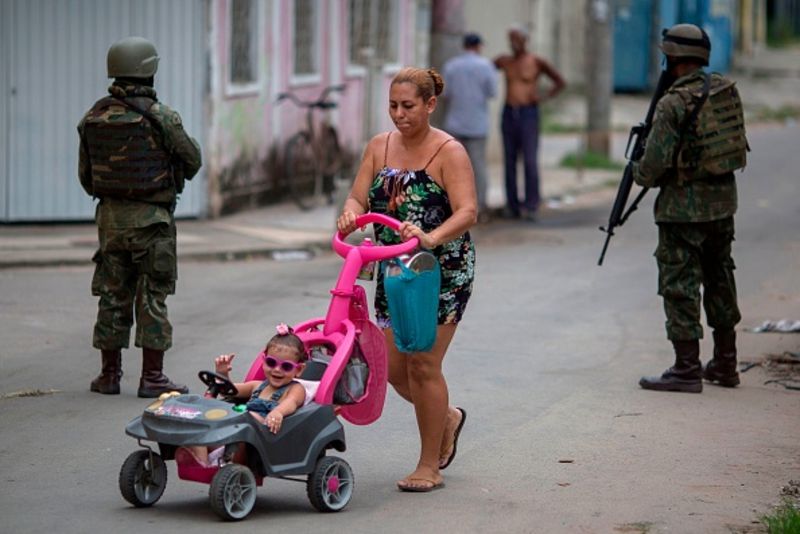
Look no further than Rio, where in the words of Justice Minister Torquato Jardim, “Police commanders are partners in organized crime.” In 2015, Rio authorities traced a surprising number of weapons seized at crime scenes to a handful of private security firms, owned — legally, as it turns out — by active police officers.
Gun violence may well be a national epidemic but, as with income and education, the toll is borne unevenly in a country fractured by class, race, age and gender. In Brazil, as in most countries, homicide is a young man’s disease, and one where both victims and perpetrators are disproportionately black and poor — a problem that a one-size-fits-all gun law can’t resolve.